Jordi Savall Receives the Ernst von Siemens Music Prize
21.1.2026
Jordi Savall receives the 2026 Ernst von Siemens Music Prize. As a performer, scholar, and musical ambassador, he has made seminal contributions to early music and historically informed performance practice. His concerts and recordings are regarded as landmarks in the field, and as a teacher and ensemble director he has shaped generations of musicians. In 1991, his music for the historical film Tous les matins du monde (The Seventh String) brought him international recognition and introduced his work to audiences worldwide.
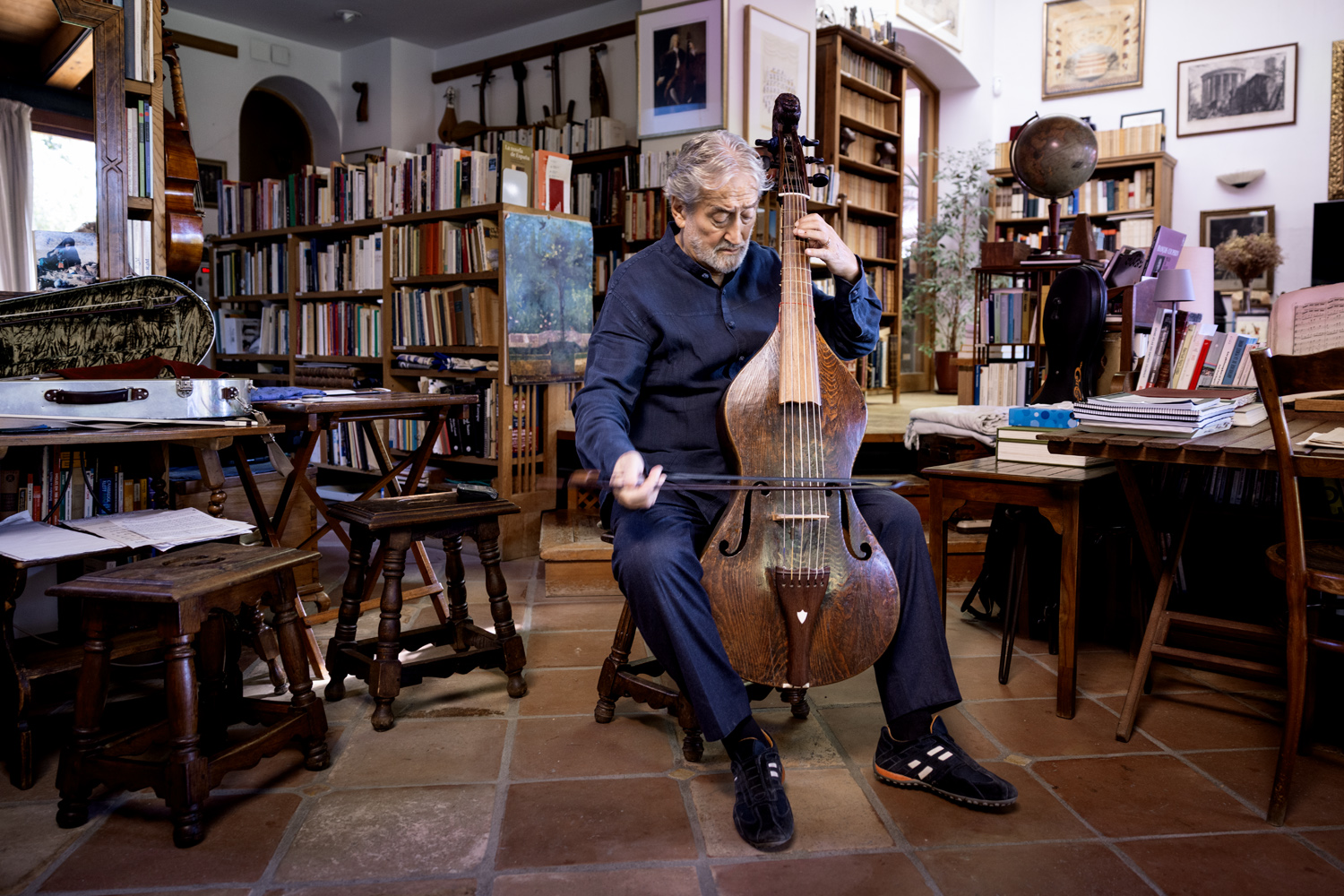
Jordi Savall began his musical training in Barcelona as a cellist. Inspired by his enthusiasm for Renaissance music, he later chose the viola da gamba as his principal instrument and completed his studies at the Schola Cantorum Basiliensis in Basel, where he would later teach. Since the late 1960s, Savall has worked tirelessly to advance early music—not only as a performer but also as a researcher exploring medieval and Renaissance manuscripts. He shared a rich artistic partnership with his first wife, the soprano Montserrat Figueras, until her death in 2011. Their two children, Arianna and Ferran, have also chosen musical careers and continue their parents’ artistic legacy. Together with Figueras, Savall founded the ensemble Hespèrion XX (today Hespèrion XXI) in 1974, which specializes in music of the Iberian Peninsula, and in 1987 the vocal ensemble Capella Reial de Catalunya, devoted to sacred music of the Middle Ages. This was followed by the founding of Le Concert des Nations in 1989, an orchestra performing Baroque, Classical, and early Romantic repertoire on period instruments. To reach a wider audience, Savall founded the record label Alia Vox in 1998, which has since released more than 230 recordings and sold over two million CDs worldwide.
Savall has long combined his musical career with social activism. In 2018, he founded the ensemble Orpheus XXI, which brings together refugee musicians from North Africa and the Arab world. His research has traced the journey of music since the 15th century along the routes of the slave trade, revealing the intertwined roots of African and European musical traditions. He continues to advocate for peace to this day:
“Music cannot end war, but it can bring peace to our hearts. Music is the only language that speaks directly to the heart. Without it, life would be impossible.”