
Composer Prize 2026
Bethan Morgan-Williams
Essay
Push and pull
by Tim Rutherford-Johnson
‘No forgiveness’ writes Bethan Morgan-Williams at the top of her score for Gormod, composed for a punchy Musikfabrik quintet of oboe, basset clarinet, euphonium, viola and cello. The composer – born in Wales in 1992 – often includes in her scores annotations like this that are as much narrative as they are expressive. Dog in the Moon, for viola and percussion, features phrases that sketch out the life story of a beloved and departed pet; Voices Go With You for ensemble, a dream/nightmare of musicians’ anxieties (‘How did we get to the auditorium?’ / ‘Tempo 1, crash site’ / ‘Crush bar, in jest’). Such lines, she admits, are not planned but written with and alongside the music.
Yet the two words that frame the emotional tenor of Gormod suggest more this. As well as a possible story, they open up a set of relationships and a moral landscape. ‘No forgiveness’: but towards whom? And for what?

Certainly, an unforgiving attitude is suggested between the music and the musicians who must play it. Like the glacier-scoured hills of the Kerry Ridgeway in mid-Wales – whose contours provide explicit inspiration for the forty-two-minute basset clarinet piece Skyppan, written for Musikfabrik’s Carl Rosman – Gormod’s technical demands need strong boots, stout hearts and a faultless sense of direction. Another might be between musicians and their listeners: an injunction to encourage confrontation and difficulty, and not soften edges or smooth the way.


And perhaps the unforgiving tone is also a word from the composer to herself. Morgan-Williams is hard on her own artistry. In ILDIO, composed for Birmingham Contemporary Music Group, she has the harpist heckle the music through a loudhailer: ‘It’s not working. It’s not a draft. It’s avoidance with a time stamp.’ The voice of internal creative conscience is presented with humour, but its point is a serious one. Any artist will recognise the tone, but to turn one’s work upon one’s own patterns of thought is to admit a painful truth: that art is hard, and its outcomes uncertain.
Yet Morgan-Williams embraces this aspect of creativity. Inspired by Tim Ingold’s idea of lines as pathways of becoming, she deliberately chooses unfamiliar or inflexible materials, and sets out with each piece to do something she has not done before. The material of Gormod, for example, is derived from choreographic directions by Lucia Dlugoszewski; Voices Go With You from the structure of a David Harsent poem, from which it also takes its title. In this way, the process of working through the materials is set ahead of any easily resolvable outcome.
The harder it is, the better. Because then it’s requiring more of me as a composer to make it work.
Morgan-Williams talks of her material becoming ‘more like itself’ during the course of the piece, leaving traces of its making imprinted upon it, like the imperfections of hand-thrown pottery.
I’m more interested in finding out what something can do than trying to make it sound good’.


And so ‘no forgiveness’ also suggests a creative ethic that does not shy away from trouble or try to polish it into consolation. In recent years, Morgan-Williams has drawn on her own experiences to write music that describes and explores challenging emotional or neurological states. ILDIO draws on her sometimes-difficult relationship with twenty-first-century life: its crowds, its noise, its flashing lights. Seeking to portray this sensation of being overwhelmed, she presents a music of multiple conflicting layers that only gradually thin to a single, still insistent, still scratchy idea. Gormod derives from a similar place. The composer describes it as an attempt to convey ‘the resilience and strength required to navigate a world that may not always comprehend the unique perspective of people who think differently’, which is illustrated across an emotional landscape as unreadable and treacherous as quicksand. Gêmdis, one of her favourite pieces, and another written for Rosman and Musikfabrik, follows an emotional path as random and recursive as the throws of a dice game.
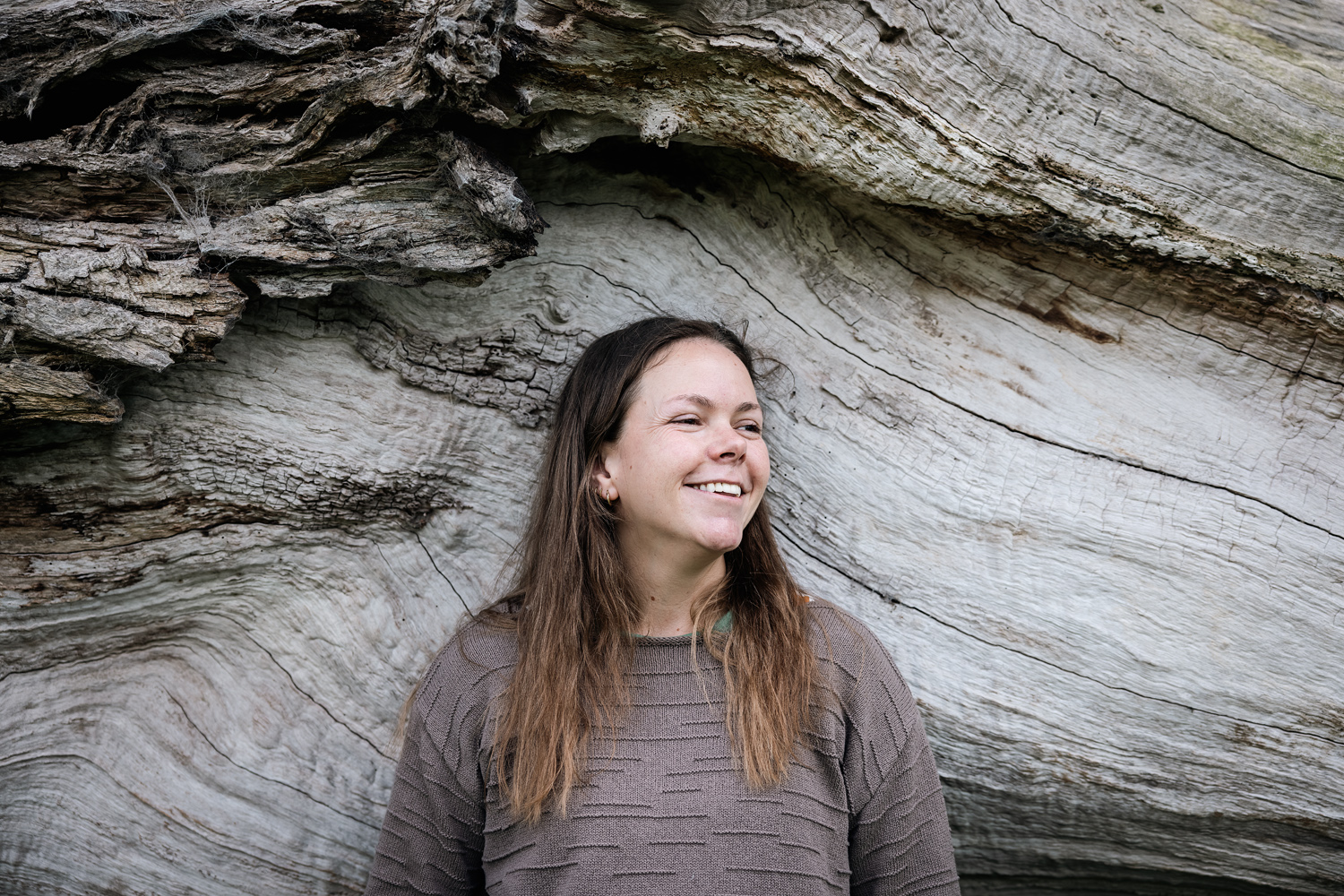
And therein lies the generative paradox of her work. For all its confrontation and challenge, its hard exterior and unforgiving tone, Morgan-Williams’ music speaks inwardly of generosity and kindness. (‘Ildio’ is Welsh for ‘surrender’; ‘gormod’ Welsh for ‘too much’). In this, she is also inspired by Hirokazu Miyazaki’s work on hope, which he shows emerging from ongoing, open-ended engagements with possibility. By engaging – without forgiveness, without compromise – with materials, musicians, listeners and sounds, Morgan-Williams seeks productive interdependence. Through such listening, fashioning and learning, obduracy becomes an invitation to understanding and intimacy.
I believe we are through the age of the self’, the composer says. ‘It’s not strong to be independent.