räsonanz – Munich 2018
George Benjamin
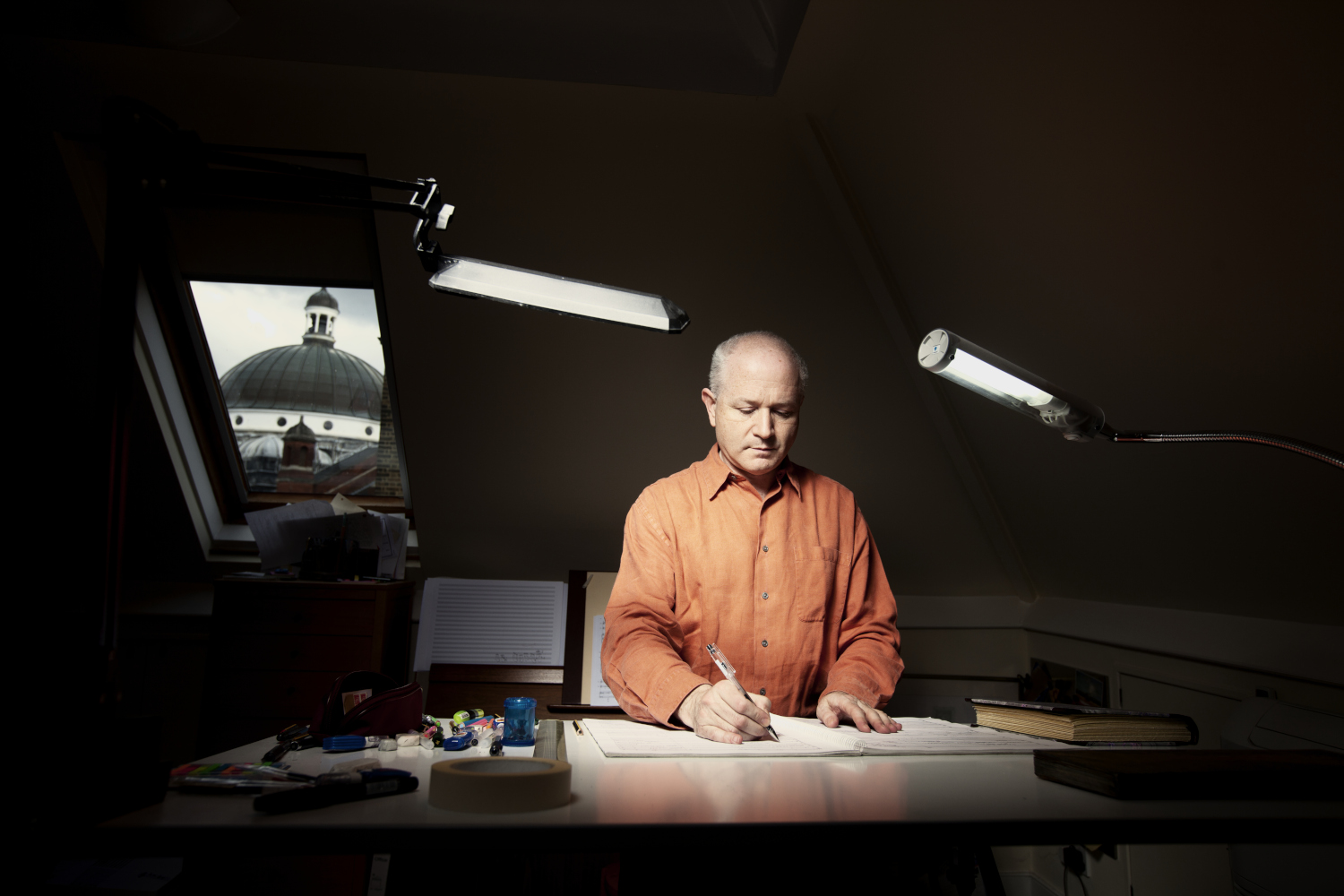
Music is unquestionably the most abstract, least earthed of all art forms and has a unique range and potential. Composers are confronted with questions that take them into a huge array of fields including architecture, logic, psychology, and technology, to name but a few. Yet, when all is said and done, composing is a process of shaping, a craft. Compositions are structured entities and our methodology is far more important for the final outcome than many people think. Only when all of the elements relate to one another harmoniously does the music “elevate” us, touch our souls ...
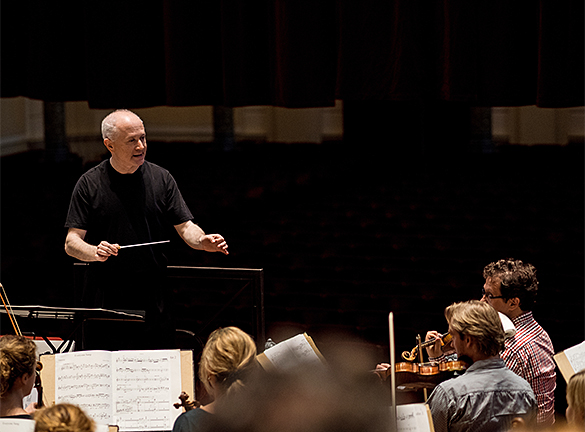
Born in 1960, George Benjamin began composing at the age of seven. In 1976 he entered the Paris Conservatoire to study with Messiaen, after which he worked with Alexander Goehr at King’s College, Cambridge.
When George was only 20 years old, Ringed by the Flat Horizon was played at the BBC Proms by the BBC Symphony Orchestra under Sir Mark Elder. The London Sinfonietta, under Sir Simon Rattle, premiered At First Light two years later. Antara was commissioned for the 10th anniversary of the Pompidou Centre in 1987 and Three Inventions was written for the 75th Salzburg Festival in 1995. The London Symphony Orchestra under Pierre Boulez premiered Palimpsests in 2002 to mark the opening of ‘By George’, a season-long portrait which included the first performance of Shadowlines by Pierre-Laurent Aimard. More recent celebrations of George’s work have taken place at the Southbank Centre in 2012 (as part of the UK’s Cultural Olympiad) and at the Barbican in 2016, and the last decade has seen multi-concert retrospectives in Paris, Lucerne, San Francisco Dortmund, Frankfurt, Aix-en-Provence, Turin, Milan, Aldeburgh, Toronto, Dortmund and New York.
George’s first operatic work Into the Little Hill, written with playwright Martin Crimp, was commissioned in 2006 by the Festival d’Automne in Paris. Their second collaboration, Written on Skin, premiered at the Aix-en-Provence festival in July 2012 has since been scheduled by 20 international opera houses, winning as many international awards. He conducted the UK premiere at the Royal Opera House, Covent Garden, in March 2013; the production was filmed and broadcast by BBC television and was revived in January 2017. The world premiere of a new collaboration with Martin Crimp, Lessons in Love and Violence, is scheduled for the Royal Opera House in 2018.
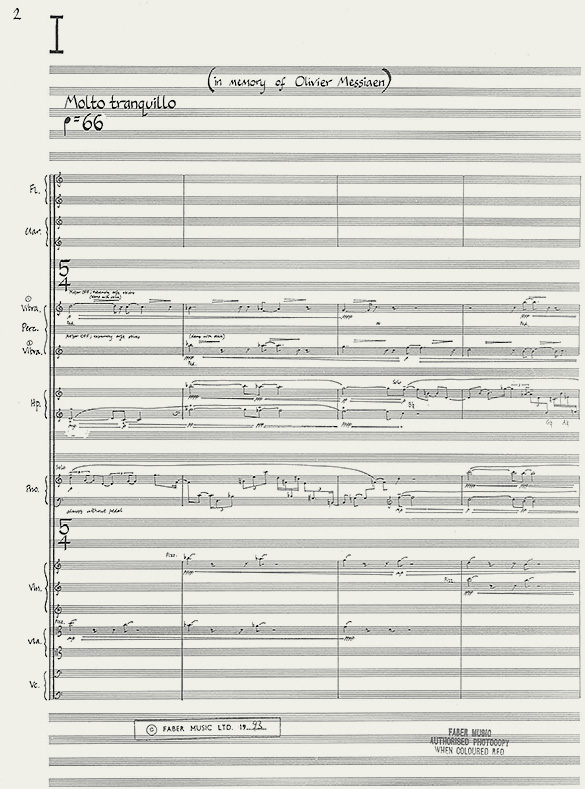
Each of Benjamin’s orchestral works… is a miraculously crafted masterpiece, often the result of years of planning and sketching…
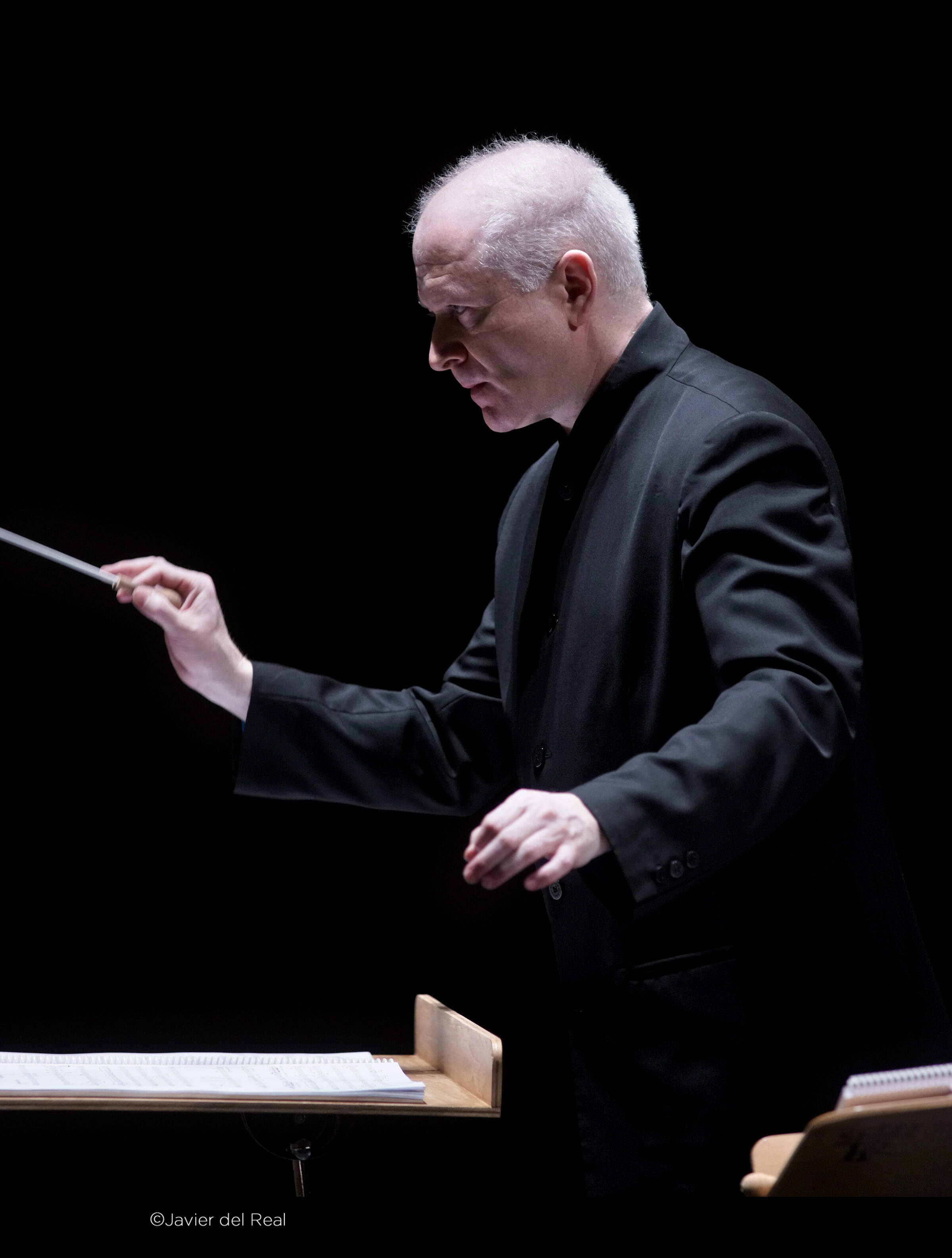
As a conductor George has a broad repertoire – ranging from Mozart and Schumann to Knussen and Abrahamsen – and has conducted numerous world premieres, including important works by Rihm, Chin, Grisey and Ligeti. He regularly works with some of the world’s leading orchestras, amongst them the Mahler Chamber Orchestra, Philharmonia Orchestra, London Sinfonietta and Ensemble Modern; he has an especially close relationship with the Royal Concertgebouw Orchestra, who gave the world premiere of Dream of the Song under his baton in Amsterdam in September 2015.
George is an Honorary Fellow of King’s College Cambridge and the Guildhall, Fellow of the Royal College of Music and an Honorary Member of the Royal Philharmonic Society and Royal Academy of Music.
… one of the greatest musicians of our time!
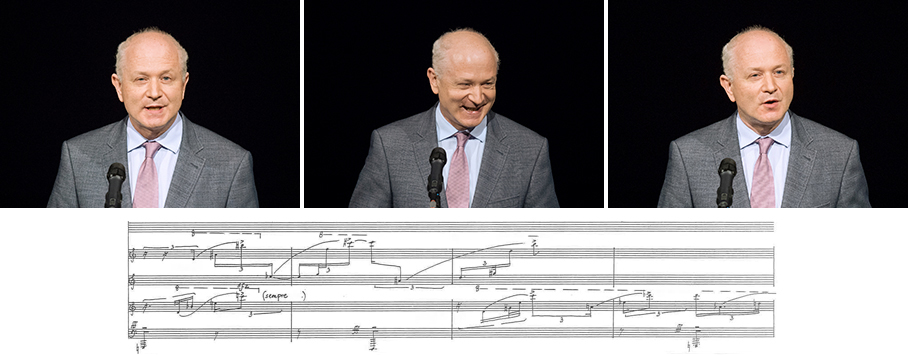
I am not trying to create some kind of philosophical or intellectual clarity. My music is not abstract. It does sometimes sound dark, but my main concern is that even in such passages, the structure must always remain audible. This is ultimately my job as a composer. Even in complex pieces like the Palimpsests, where I place eight or nine layers on top of one another, I want the form to shine through. I certainly don’t want a ’bouillabaisse’. Form is what gives music its energy; it is what allows us to decipher harmonies and polyphonies.

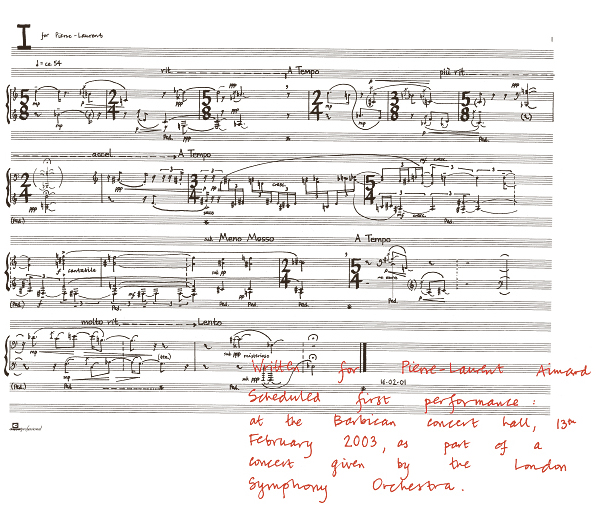
Pierre-Laurent Aimard on George Benjamin’s Shadowlines:
“George and I have been friends since our student days at the Paris Conservatoire. He was working on his large orchestral piece Palimpsets and reached a point where he couldn’t continue. He called me on the phone and said, ‘You’ll be getting a surprise’. A day later the piece came in the mail. It was born during a blocked creative compositional process and at the same time resolved it. In that phase of his work he expanded his style by an extremely polyphonic dimension, combined with the charming sound that was always characteristic of George’s music. The piece is a mutual penetration of two opposed, almost contradictory musical forms: prélude and canon.“
… one of the most formidable composers of his generation