räsonanz – München 2026
Wolfgang Rihm
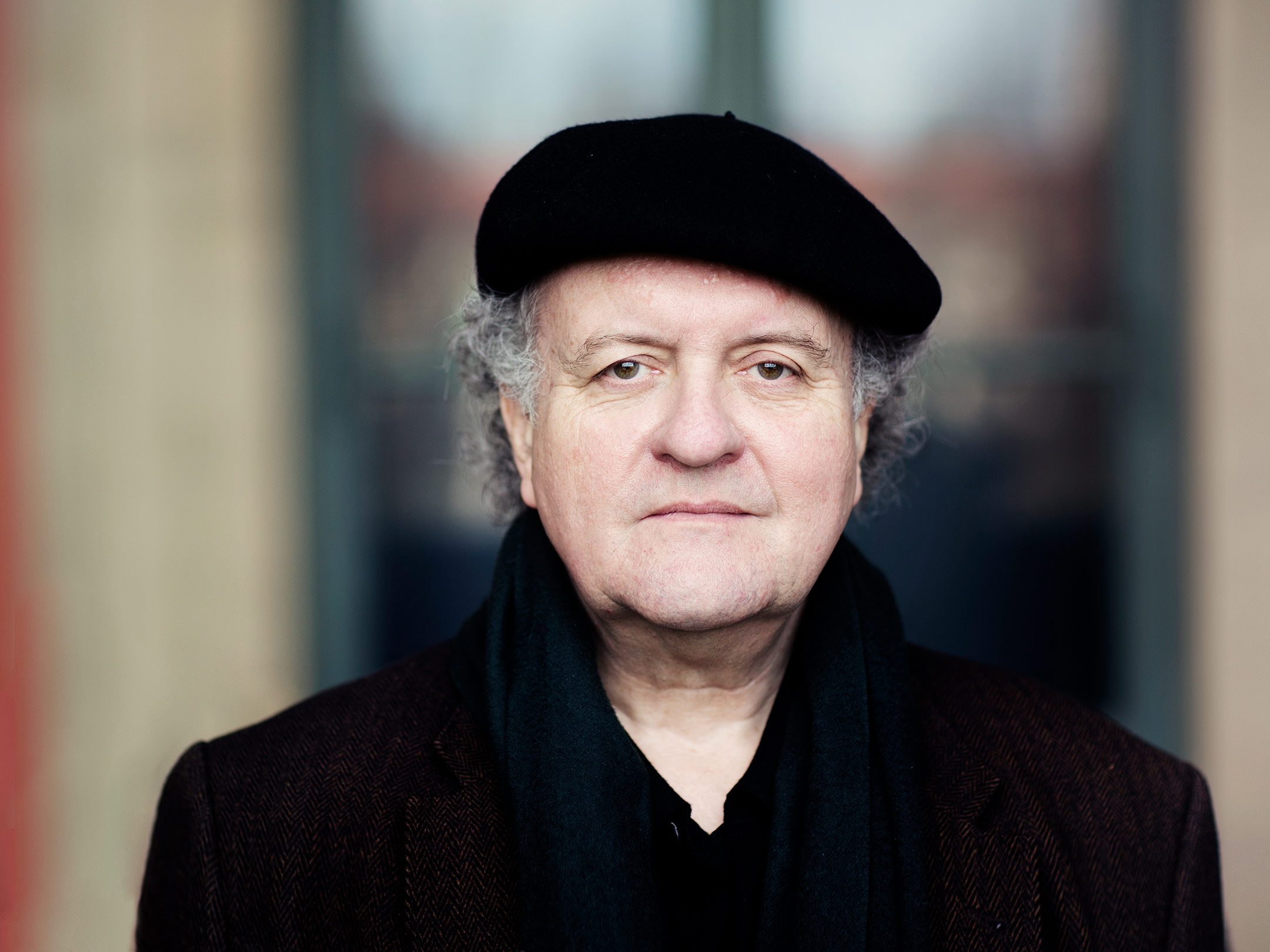
Wolfgang Rihm was born on 13 March 1952 in Karlsruhe, a city near the French and Swiss borders, at a stone’s throw from Strasbourg and Basel, two of the many places where he and his music were at home. He lived there to this death in a spacious apartment not only full of books and scores – those one takes for granted – but also of paintings by contemporary artists, mainly by Kurt Kocherscheidt, the Austrian painter with whom Rihm was befriended and to whom he has dedicated a number of works.
Rihm was a composer, professor of composition at the Music Academy of his native city (Vykintas Baltakas and Jörg Widmann count amongst his many students there), a remarkable writer on music with several books to his name, including collections of his articles and interviews. He also chaired a number of influential committees in Germany and had a say in decisions affecting the working conditions of his fellow musicians.
From 1993 onward, Rihm was a member of the Curatorium of the Ernst von Siemens Music Foundation; in 2003, he received the Ernst von Siemens Music Prize.
No doubt about it: Wolfgang Rihm was a unique phenomenon: larger than life. His knowledge of music (the art and craft of composition as well as that of music history, spanning from ancient times up to the present day) was vast. He also, however, seemed to know everything worth knowing about literature, painting, architecture and philosophy, which he freely drew on as sources of inspiration. The numerous texts he has set to music indicate the breadth of his culture: from Homer to Hölderlin and Goethe to Rilke, Botho Strauss and Durs Grünbein.
The world he has created with his compositions, which number at over 500 pieces, is a veritable universe. As such, it cannot be pidgeonholed. To paraphrase the title of a well-known British film on Thomas More, he was a composer for all seasons. Rihm has written ‘new music’ as it is commonly called and some of his titles have become signposts in the history of post-war music. Soloists, chamber groups and orchestras programme these pieces as a matter of course now, they have become an integral part of the repertoire (Jagden und Formen,Chiffre-cycle,Pol – Kolchis – Nucleus). Of similar significance are the compositions which take their cue, as it were, from music of past centuries: oratorios with Johann Sebastian Bach as a point of reference (Deus Passus), orchestral pieces of Brahmsian sound and gesture (Ernster Gesang, Nähe fern 1-4), chamber music in the wake of Robert Schumann (Fremde Szenen).
Already at the age of 25, he composed a chamber opera (Jakob Lenz) that has since proved itself as possibly the most often produced piece of contemporary music theatre in Germany. Jakob Lenz has been followed by a series of large-scale operas (Die Hamletmaschine, Die Eroberung von Mexico, Das Gehege, Dionysos).

Wolfgang Rihm was one of the frontrunning lied composers of our times; his string quartets, for instance, often being presented in cycles by a wide range of groups.
Rihm was a composer who put a giant question-mark over his doing. Each new work was an answer to the question raised by the previous piece; each new work posed questions which he would seek a reply to in the composition to be written next. Thus, work cycles emerged, work families that formed a web with other cycles and individual pieces. Everything was in permanent growth, work never stopped, new compositions were produced, brought into intriguing relationships with other works, revised and supplemented.
Rihm has also proven himself a remarkable draughtsman; his poem on the trumpet concerto Marsyas, proves, once more, that Wolfgang Rihm was, indeed, a force to consider.
Until his death on 27 July 2024, Wolfgang Rihm was involved in the planning of the Lucerne festival as Artistic Director of the Academy, he is one of the most performed contemporary composers in Europe.
Wolfgang Rihm in the Ernst von Siemens Music Foundation Archive
Learn more about Wolfgang Rihm at Universal Edition